The Freight Modes are Shifting. Your Stakeholders Know It.
Back in April, I authored an analysis for IANA (Intermodal Association of North America) on what happens when diesel prices stay high and regulatory compliance removes capacity from the market. Five months later, we're living the answer. And in freight, shippers are making urgent decisions about modal mix, carriers are choosing which lanes to fight for, and brokers are becoming essential to helping their customers navigate the options.
The Market Has Changed
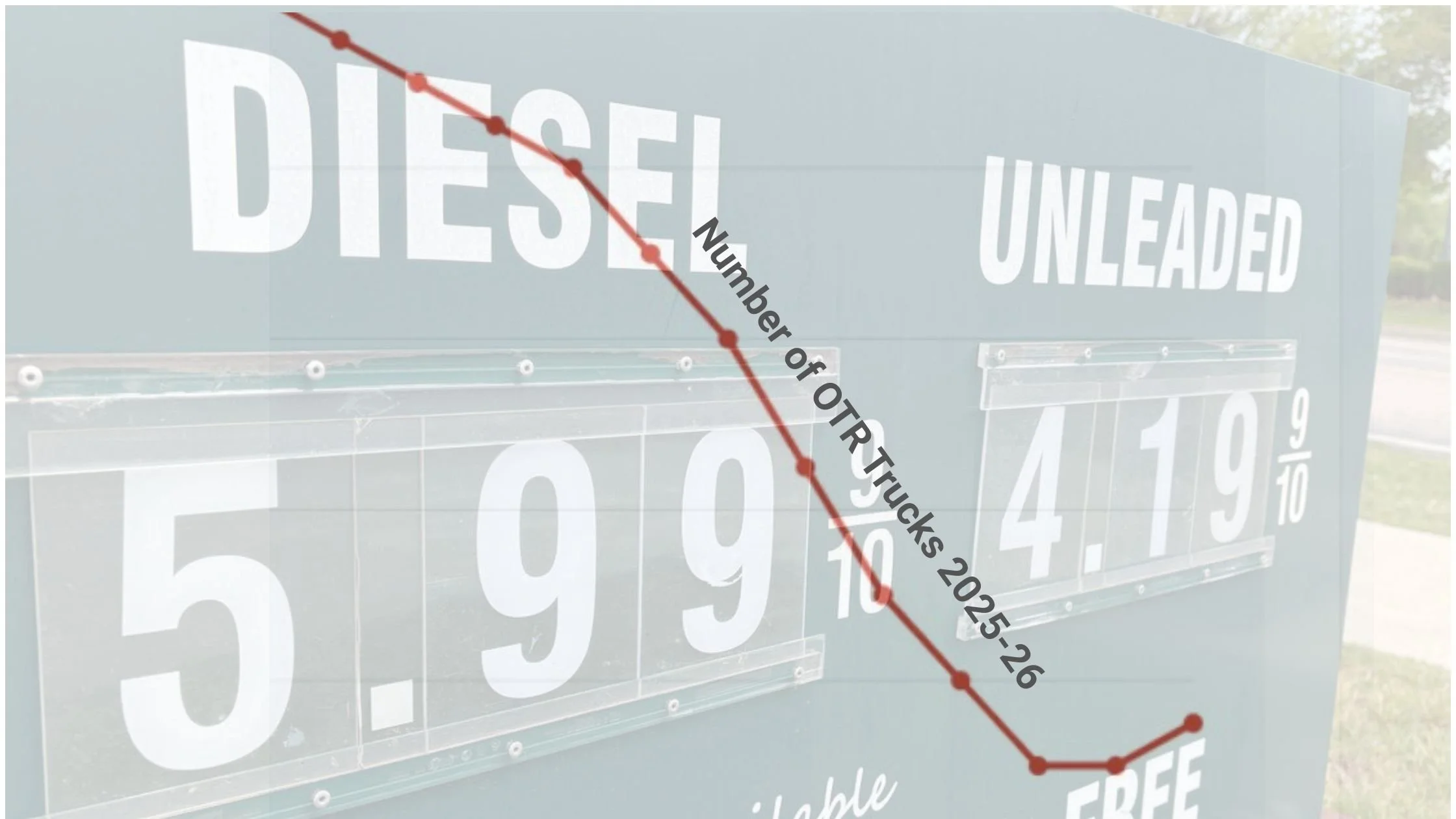
Supply driven market changes can affect the modal balance.
The data is clear. The market is reorganizing. And the companies that understand what's really happening, and can communicate it clearly, will navigate this moment better than those caught flat-footed.
Here's what you need to know.
What's Actually Happening Right Now
The evidence is concrete:
· Load-to-truck ratios in late August show dry van at 9.98 loads per truck, versus 5.81 a year ago. That's 72 percent fewer trucks available.
· Flatbed hit 35.75, up from 20.45. A 75 percent tightening.
· Reefer running at 20.57.
These aren't seasonal fluctuations. They're structural capacity withdrawal. Smaller carriers have already parked equipment. Larger ones are culling unprofitable lanes. The result: available capacity is genuinely constrained, and shippers are feeling it.
The railroads are absorbing this volume: BNSF at 9.5 percent growth, CSX at 8.3 percent, Norfolk Southern at 5.1 percent, Union Pacific at 3.3 percent. They are the ones with capacity when truckload is scarce. And the shippers who made those decisions in May aren't reversing course.
Why This Matters to Your Conversations
If you're a shipper: Your customers are asking harder questions about reliability and cost, and they're actively evaluating whether trucking is still the right mode for all of their lanes. Your internal logistics team is running modal scenarios. Your procurement conversations are happening right now with different urgency than they had six months ago. The modal decision is being made now, and it locks in through 2027.
If you're a carrier or IMC: Your shippers are in active decision mode about modal mix and lane economics and they know the capacity constraints are structural, not temporary. The conversations you're having now are locking in modal decisions that persist through 2027. Your shipper base is fragmenting: some staying truck-first, others converting to rail. Both expect you to understand why those modal choices matter to their margin.
If you're a broker: Your customers are under pressure and confused about trucking capacity but modal alternatives exist and they're evaluating them now. Trucking capacity is genuinely tight. Conversations that used to be about OTR optimization are now about modal mix. Your role as someone who understands the landscape and can help them evaluate which modes work for which lanes has become more valuable, and more urgent.
The Market Moment You're In
Here's what matters: This isn't a temporary crunch. It's a market reorganization. Smaller carriers have already exited or are exiting and that capacity doesn't come back when diesel prices moderate. Shippers who convert to rail because of September 2026 capacity constraints aren't reverting to 100 percent truck just because rates soften in 2027. Rail operators who absorb this volume now are prioritizing reliability, volumes and velocity because that's what locks in customer loyalty.
The companies thriving in moments like this are the ones who understand what's actually happening and can communicate it clearly to their customers, stakeholders, teams, and investors.
That's the real competitive advantage.
Shippers who can articulate why they're making modal decisions stay ahead of their competition. Carriers who explain why certain lanes are unprofitable and where they add value, command respect in negotiations. Brokers who understand the market pressure and can help customers navigate it thoughtfully position themselves as partners, not vendors.
The companies that get caught without a clear narrative about what's happening in their market are the ones scrambling to explain decisions after the fact.
What This Means for How You Communicate
The freight market is reorganizing around capacity and cost realities. Your stakeholders, whether that's your board, your customers, your sales team, or your shipper base are noticing. They're asking questions. Some of them are making urgent decisions.
The companies that win in moments like this are the ones who understand modal economics and can explain why they’re making mode decisions. Not react to it. Navigate it with confidence.
That means understanding which modes matter for which lanes. Understanding what your stakeholders actually need to know to make good modal decisions. And being able to communicate all of that clearly.
That's where the real competitive advantage happens.
This analysis builds on IANA's April 2026 white paper "Fuel Volatility and Intermodal Impacts" and reflects freight market data through August 31, 2026, including IANA volume tracking, DAT Freight & Analytics capacity metrics, and AAR rail data. Market conditions are evolving rapidly. If you need current analysis to inform your communications strategy, we're tracking it.